Peju Alatise Biography: Awards, Religion, Education, Date of Birth, Birthplace

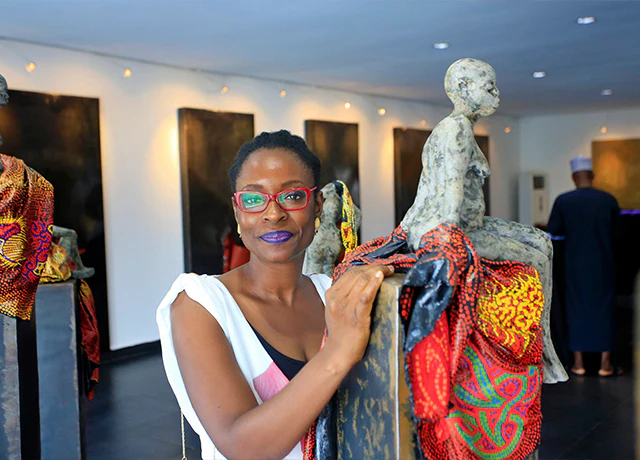
Peju Alatise is one of Nigeria’s most celebrated and internationally recognized contemporary artists a multimedia sculptor, painter, installation artist, poet, and author whose work has been exhibited at the Venice Biennale, the Smithsonian Institution in Washington D.C., and major art fairs across Africa, Europe, and the Americas.
Winner of the prestigious 2017 FNB Art Prize one of the most coveted art awards on the African continent Alatise uses her art as a powerful tool for social commentary, exploring the experiences of women in Nigeria, critiquing gender inequality, and bearing witness to the social and political realities of her country and continent.
She is among the first three Nigerians to exhibit at the Venice Biennale and a Fellow at the National Museum of African Art, part of the Smithsonian Institution.
Profile
| Full Name | Peju Alatise |
| Born | 1975 |
| Birthplace | Lagos, Nigeria |
| Nationality | Nigerian |
| Occupation | Multimedia Artist, Architect, Sculptor, Poet, Author |
| Religion | Muslim (raised in a traditional Muslim family) |
| Education | Ladoke Akintola University of Technology (Architecture) |
| Awards | FNB Art Prize (2017) |
Who Is Peju Alatise?
Peju Alatise (born 1975) is a Nigerian interdisciplinary artist, architect, and author of two published novels. She is one of the leading voices in contemporary African art, known for works that span painting, sculpture, film, and large-scale installation. Her art centers on the social, political, and spiritual experiences of women in Nigeria and Africa from child marriage to the kidnapping of schoolgirls to gender-based violence and the suppression of female identity. She is a Fellow at the National Museum of African Art, Smithsonian Institution, and in 2017 became the first Nigerian to win the FNB Art Prize at the Joburg Art Fair. That same year, she represented Nigeria at the 57th Venice Biennale one of the world’s most prestigious and oldest international art exhibitions. Alatise lives and works between Lagos, Nigeria, and Glasgow, UK.
Early Life
Peju Alatise was born in 1975 in Lagos, Nigeria, the fifth of seven siblings, into a traditional Muslim family. Growing up in the megacity of Lagos, she was exposed from childhood to the full spectrum of Nigerian society its creativity, its vibrancy, its inequalities, and its contradictions. Her passion for art was ignited at the age of 15 when she attended an exhibition by prominent Nigerian visual artist David Dale. The encounter was transformative, immediately awakening in her a burning desire to pursue art as a vocation.
Her father was initially reluctant to support her artistic ambitions, feeling that art was not a stable career path. Her mother, however, was supportive. Before her father’s death, he came around and accepted her passion, recognizing the depth of her commitment. This family dynamic the negotiation between traditional expectations and personal calling would later become a recurring theme in her artistic and literary explorations of women’s identities in African societies.
Education
Peju Alatise received her formal professional training as an architect at Ladoke Akintola University of Technology (LAUTECH) in Oyo State, Nigeria. While studying architecture, she simultaneously ran a private art studio, maintaining both professional identities from the beginning of her adult career. Her architectural training gave her a structural and spatial approach to artistic creation a quality that is evident in the scale and precision of her large installation works. Following graduation, she worked as an independent studio artist for over 13 years, developing the distinctive aesthetic that would eventually earn her international acclaim, while also writing two published novels and working on architectural projects.
Career
Peju Alatise began her professional artistic career with painting but has evolved into a fully interdisciplinary artist whose practice encompasses sculpture, large-scale installation, film, and literary writing. Her formal artistic mentorship under David Dale the Nigerian artist who first inspired her at 15 proved foundational, and she went on to work with traditional artisans across Africa, learning to incorporate diverse materials including beads, cloth, natural resins, and found objects into her ambitious works.
Her 2013 exhibition Wrapture: A Story of Cloth at Art Twenty One in Lagos brought her work to wider public attention, presenting sculptures alongside short stories in a captivating integrated visual-literary narrative. It was followed by several other exhibitions and art fair appearances, including the 1:54 African Contemporary Art Fair at Somerset House, London (2014).
In 2017, Alatise achieved two landmark moments simultaneously. She was selected as one of Nigeria’s exhibiting artists for the country’s debut pavilion at the 57th Venice Biennale the world’s oldest and most prestigious international art exhibition an honor that placed her work before the global art world’s most discerning audiences. The Nigerian pavilion’s theme was “How About Now,” and her installation Flying Girls which addressed child labour, kidnapping, and the denial of freedom to the girl child in Nigeria was one of the most talked-about works at the entire Biennale.
In the same year, Alatise was announced as the winner of the 2017 FNB Art Prize at the annual Joburg Art Fair in South Africa. The FNB Art Prize is widely regarded as one of Africa’s most coveted art honors. The recognition cemented her status as one of the continent’s leading artists.
In 2018, she founded the Alter-Native Artists Initiative (ANAI) an incubatory artist collective that offers training programs, mentorship, and residencies for young and emerging artists in Nigeria and abroad. She has also established artist residency programs in Morocco and Turkey, reflecting her commitment to fostering cross-cultural artistic collaboration and creating opportunities for the next generation of African artists.
She was selected as an exhibiting artist for the prestigious Venice Architecture Biennale in 2020, curated by Hashim Sarkis a further recognition of her architectural and spatial design contributions.
Awards & Nominations
- FNB Art Prize – Joburg Art Fair, South Africa (2017)
- ANA/Flora Nwapa Prize for Women’s Writing Nomination – for debut novel Orita Meta (2006)
- Fellow, National Museum of African Art, Smithsonian Institution, USA
- Works acquired by the Smithsonian Institution’s permanent collection
- Among the first three Nigerians to exhibit at the Venice Art Biennale (2017)
Social Media
Peju Alatise maintains an active presence on Instagram and Twitter, where she shares her artwork, exhibitions, and advocacy activities. She is represented by Rele Gallery in Lagos and has a significant following among art collectors, critics, and enthusiasts worldwide.
Personal Life
Peju Alatise grew up in a traditional Muslim family in Lagos. She is deeply private about her personal life, though she has spoken in interviews about her childhood, her father’s initial opposition to her artistic career, and the formative influence of growing up as a woman in Nigeria. She is a passionate advocate for women’s rights and gender equality, using both her art and her literary work as platforms to challenge the oppression of women in Nigerian and African society. Her campaigns against child marriage and her support for survivors of the Chibok kidnapping have been particularly prominent. She lives and works between Lagos, Nigeria, and Glasgow, United Kingdom.
Net Worth
Peju Alatise’s net worth has not been publicly disclosed. As an internationally exhibited artist whose works are held in permanent collections including the Smithsonian Institution and who has won Africa’s most coveted art prize, her sculptures and installations command significant prices in the contemporary art market. Her income is derived from art sales, commissions, exhibition fees, book royalties, and her foundation and residency programs. She is considered one of the most commercially successful Nigerian artists of her generation.
Works & Publications
- Orita Meta (2001) – debut novel, nominated for ANA/Flora Nwapa Prize for Women’s Writing
- Material Witness (2012) – Nike Art Gallery, Lagos
- Wrapture: A Story of Cloth (2013) – Art Twenty One, Lagos
- Flying Girls – installation at Venice Biennale (2017)
- High Horse – sculpture on gender inequity
FAQs
Who is Peju Alatise?
She is an award-winning Nigerian multimedia artist, architect, and author, best known for winning the 2017 FNB Art Prize and representing Nigeria at the Venice Biennale.
What is Peju Alatise known for?
She is known for her powerful installations and sculptures addressing women’s rights, child marriage, and the social conditions of women in Nigeria, as well as for being among the first Nigerians to exhibit at the Venice Biennale.
What university did Peju Alatise attend?
She studied Architecture at Ladoke Akintola University of Technology (LAUTECH) in Oyo State, Nigeria.
Has Peju Alatise written any books?
Yes. She has published two novels, including her debut Orita Meta, which was nominated for the ANA/Flora Nwapa Prize for Women’s Writing in 2006.
Conclusion
Peju Alatise is a force of nature an artist whose creative intelligence, technical mastery, and moral courage have placed her at the very forefront of contemporary African art. From the galleries of Lagos to the pavilions of the Venice Biennale, her work consistently demands that we look unflinchingly at the realities of women’s lives in Nigeria and across the continent. In an art world too often enamored of style over substance, Peju Alatise reminds us that the most powerful art is always in service of truth. She is not merely making beautiful objects she is making the world pay attention to stories that must be told.