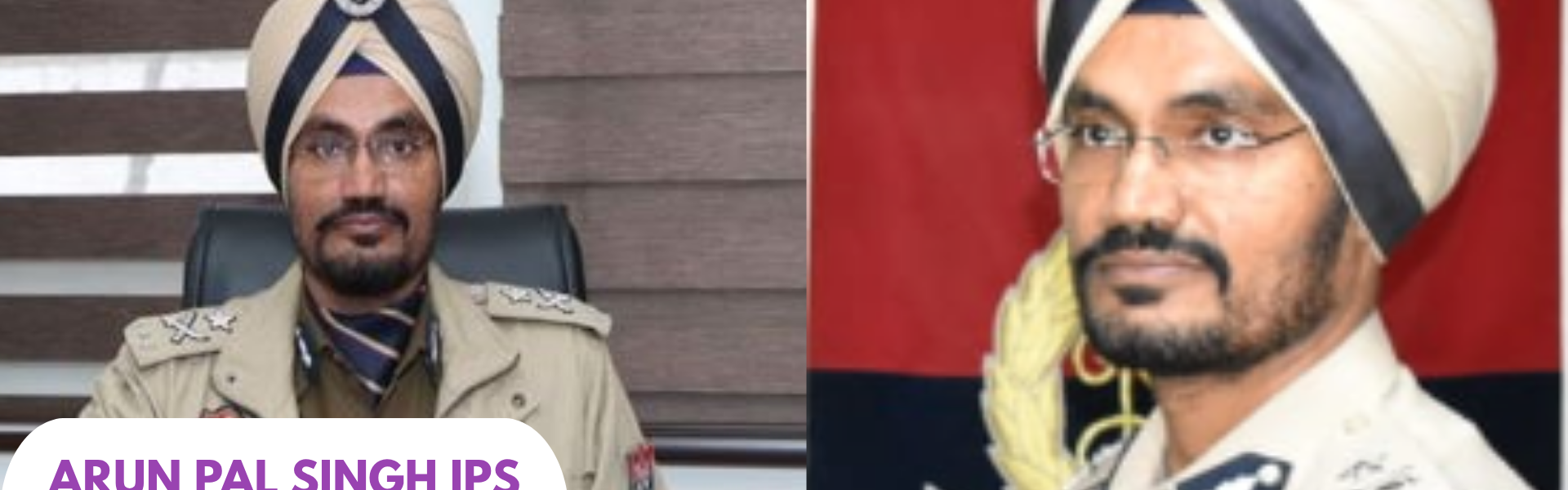

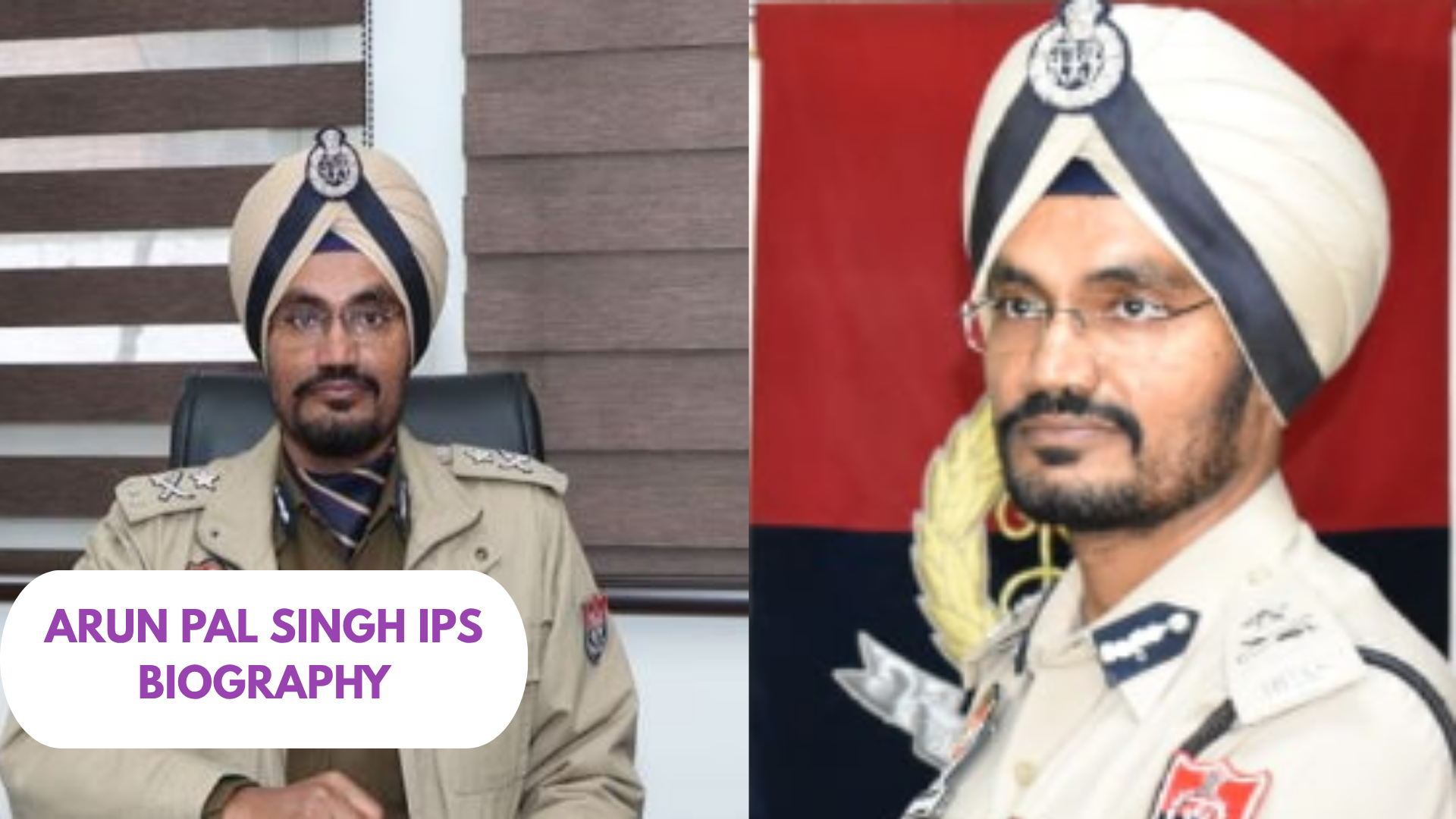
Arun Pal Singh is a highly respected Indian Police Service (IPS) officer of the Punjab cadre, widely recognized for his leadership, discipline, and long-standing contributions to policing and governance in India. With a career spanning nearly three decades, he has held several critical positions and has been honored with prestigious national awards.
His journey reflects a rare combination of administrative excellence, ethical leadership, and operational expertise, making him one of the distinguished officers in Indian law enforcement.
Early Life
Arun Pal Singh was born on April 20, 1973 and raised in Chandigarh, India. His upbringing was deeply influenced by a family rooted in public service. His father, Late T.S. Sahota, served as a senior officer in the Indian Railway Traffic Service (IRTS), known for his integrity and professionalism.
Growing up in such an environment instilled in him values of discipline, accountability, and service to the nation. From an early age, he showed a strong inclination toward academics and leadership.
Education
Arun Pal Singh pursued his education with a focus on science and analytical thinking. He later completed an engineering degree, which helped him develop problem-solving skills and a structured approach to complex situations.
In addition to academics, he was also actively involved in sports and became a national-level badminton player, reflecting his dedication, discipline, and competitive spirit.
UPSC Journey and IPS Training
Driven by a desire to serve the country, Arun Pal Singh appeared for the Union Public Service Commission (UPSC) examination—one of the toughest exams in India—and successfully secured a position in the Indian Police Service.
He belongs to the 1997 batch of the Punjab cadre IPS officers.
After selection, he underwent rigorous training at the Sardar Vallabhbhai Patel National Police Academy (SVPNPA) in Hyderabad, where he excelled in both academic and physical training modules.
Career and Professional Journey
Early Career
Arun Pal Singh began his career with field postings as an Assistant Superintendent of Police (ASP) in cities like Amritsar and Jalandhar. These early assignments exposed him to complex policing environments and helped shape his operational skills.
Key Positions Held
Throughout his career, he has served in multiple high-responsibility roles, including:
- Superintendent of Police (SP) in various districts
- Senior Superintendent of Police (SSP) in Ludhiana, Amritsar, Sangrur, and others
- Deputy Inspector General (DIG) and Inspector General (IG) roles
- Commissioner of Police, Amritsar
- IG Crime and Intelligence roles
- Additional Director General of Police (ADGP), Punjab
He also served as ADGP (Jails), where he introduced reforms and modernization in prison administration.
Recent Roles
In 2026, he was appointed as the Managing Director of the Punjab Police Housing Corporation after serving as ADGP (Jails).
This role highlights his administrative capabilities beyond traditional policing, contributing to infrastructure and institutional development.
Leadership Style and Work Ethic
Arun Pal Singh is known for his:
- Strong ethical foundation
- Discipline and personal austerity
- Long working hours (often exceeding 18 hours daily)
- Ground-level engagement with citizens
His leadership style emphasizes accountability, transparency, and community-oriented policing.
Major Achievements and Contributions
1. Police Administration Excellence
He has successfully handled law-and-order situations in major districts of Punjab, ensuring stability and public safety.
2. Prison Reforms
As ADGP (Jails), he introduced structural reforms, improved governance, and enhanced correctional systems.
3. International Representation
He represented India at the Asian Pacific Association of Correctional Administrators (APAAC) conference in South Korea, contributing to global discussions on prison management.
4. Modernization of Police Force
During his tenure in modernization roles, he contributed to technological upgrades and infrastructure development in Punjab Police.
Awards
One of the most significant highlights of his career is receiving the President’s Medal for Distinguished Service—not once but twice.
- Awarded on Republic Day 2026
- Recognized for exceptional service in policing and governance
This prestigious award is given to officers who demonstrate outstanding dedication, integrity, and excellence in public service.
Personality and Personal Life
Arun Pal Singh is known for maintaining a simple and disciplined lifestyle. Key aspects include:
- Deep spiritual inclination
- Vegetarian lifestyle
- Focus on self-discipline and ethical conduct
Despite his high-profile career, he keeps his personal life private, with limited public information about his spouse or children.
Legacy and Impact
Arun Pal Singh’s career stands as a benchmark for:
- Ethical leadership in public service
- Administrative excellence
- Commitment to reform and modernization
His contributions have strengthened policing systems and improved governance standards in Punjab and beyond.
Frequently Asked Questions (FAQs)
1. Who is Arun Pal Singh IPS?
Arun Pal Singh is a 1997 batch IPS officer of the Punjab cadre known for his leadership and public service.
2. What is Arun Pal Singh’s current position?
As of 2026, he serves as Managing Director of Punjab Police Housing Corporation.
3. What awards has he received?
He has received the President’s Medal for Distinguished Service twice.
4. What is his educational background?
He holds an engineering degree and has a strong academic background.
5. What is he known for?
He is known for discipline, prison reforms, and administrative excellence.
Conclusion
Arun Pal Singh exemplifies the ideals of integrity, discipline, and public service. From his early days in Chandigarh to becoming a senior IPS officer, his journey reflects perseverance, excellence, and unwavering dedication.
With multiple leadership roles, international exposure, and prestigious awards, his career continues to inspire aspiring civil servants across India. His legacy is not just defined by positions held but by the positive impact he has made on policing and governance.