

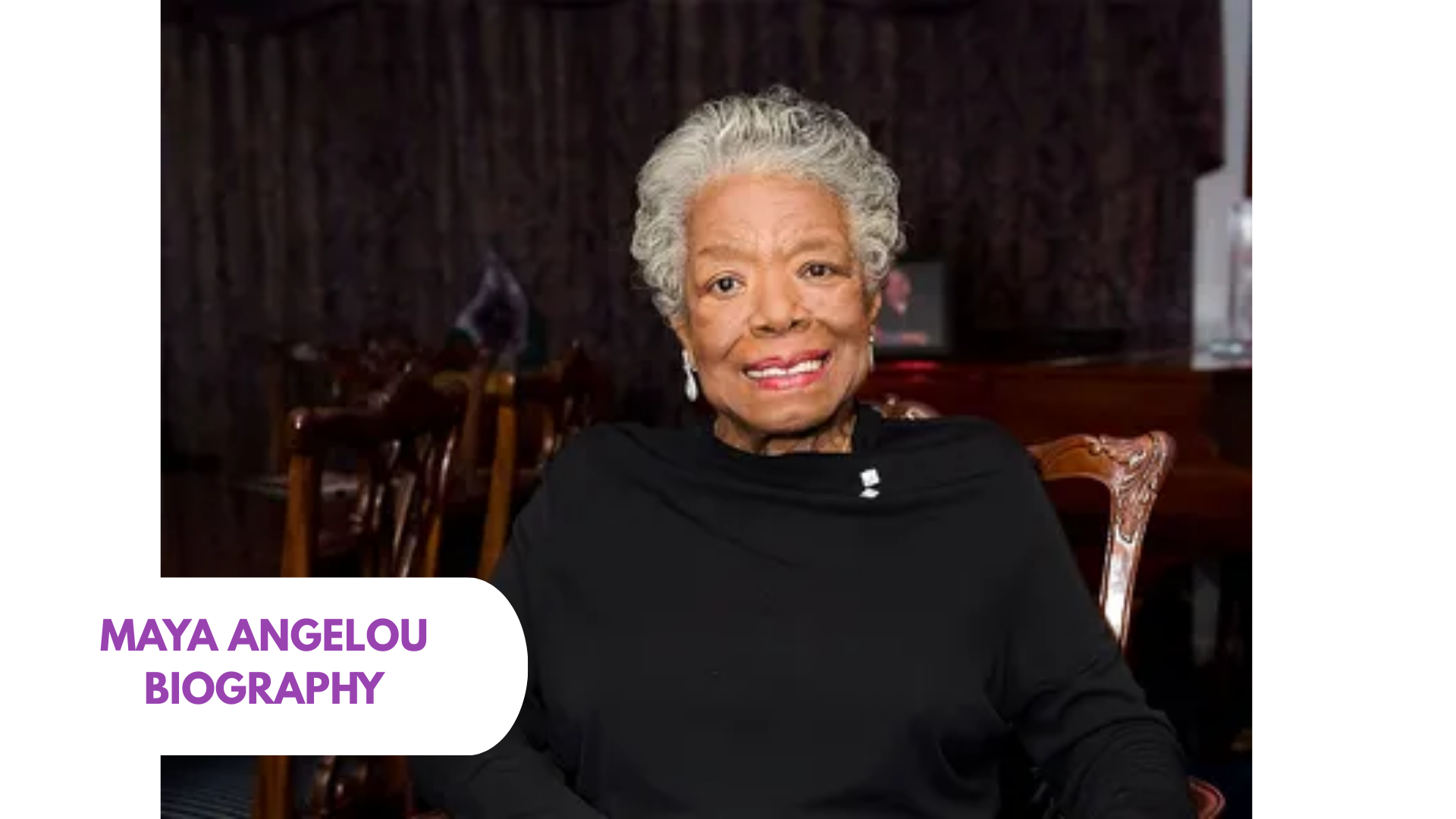
The story of Maya Angelou is one of resilience, courage, brilliance, and profound influence. As an acclaimed poet, memoirist, civil rights activist, actress, and professor, Maya Angelou transformed pain into power and adversity into art. Her voice echoed across generations, shaping American literature and empowering millions worldwide.
From her groundbreaking autobiography I Know Why the Caged Bird Sings to her powerful poem Still I Rise, Angelou’s works remain timeless treasures in the literary world.
Data
| Full Name: | Marguerite Annie Johnson |
| Stage Name: | Maya Angelou |
| Born: | April 4, 1928 |
| Age: | 86 years (at the time of death) |
| Death: | May 28, 2014 |
| Birthplace: | St. Louis, Missouri, United States |
| Nationality: | American |
| Occupation: | Poet, Memoirist, Civil Rights Activist, Actress, Professor |
| Religion: | Christianity |
| Parents: | Bailey Johnson, Vivian Baxter |
| Siblings: | Bailey Johnson Jr. |
| Children: | Guy Johnson |
Early Life and Education
Maya Angelou was born Marguerite Annie Johnson on April 4, 1928, in St. Louis, Missouri, United States. Her childhood was marked by instability and hardship. After her parents’ divorce, she and her brother were sent to live with their grandmother in Stamps, Arkansas.
Growing up in the racially segregated American South deeply shaped Angelou’s worldview. She experienced racism and trauma at a young age, which left her nearly mute for several years. During this period of silence, she developed a profound love for literature, memorizing works by authors such as William Shakespeare and Charles Dickens.
Books became her refuge—and eventually, her power.
Despite not following a traditional academic path early in life, Angelou graduated from high school in San Francisco. She later studied dance and drama and worked various jobs including streetcar conductor, cook, and nightclub performer.
In the 1950s, she toured Europe as part of the opera production Porgy and Bess. Her artistic versatility became evident as she transitioned between acting, singing, and writing.
Angelou’s global exposure and experiences enriched her storytelling and broadened her cultural awareness.
Rise to Literary Fame
Maya Angelou’s breakthrough came in 1969 with the publication of I Know Why the Caged Bird Sings. The book was revolutionary. It was one of the first autobiographies by a Black woman to achieve widespread critical and commercial success.
The memoir detailed her childhood experiences, including racism and trauma, yet conveyed strength and resilience. It was nominated for a National Book Award and later became a staple in schools and universities.
Angelou went on to write six additional autobiographies, including:
- Gather Together in My Name
- Singin’ and Swingin’ and Gettin’ Merry Like Christmas
- The Heart of a Woman
Her autobiographical works broke literary boundaries and redefined personal storytelling in American literature.
Maya Angelou and the Civil Rights Movement
Beyond literature, Maya Angelou was deeply involved in the Civil Rights Movement. She worked closely with influential leaders such as Martin Luther King Jr. and Malcolm X.
Angelou served as the Northern Coordinator for the Southern Christian Leadership Conference. She also spent time in Ghana, where she became part of the African diaspora intellectual community.
Her activism was not separate from her writing—it fueled it. Themes of equality, justice, dignity, and empowerment became central pillars of her poetry and prose.
Poetry and Literary Impact
While her autobiographies brought her fame, her poetry cemented her legacy.
One of her most celebrated poems, Still I Rise, became an anthem of strength, particularly for women and marginalized communities. Its powerful message of resilience continues to inspire readers worldwide.
Another historic moment in her career occurred in 1993 when she recited her poem On the Pulse of Morning at the inauguration of Bill Clinton. She became the first poet since Robert Frost to recite at a U.S. presidential inauguration.
Her poetry collections include:
- Just Give Me a Cool Drink of Water ’fore I Diiie
- And Still I Rise
- Phenomenal Woman
Her works often explore themes such as identity, race, womanhood, love, and perseverance.
Awards
Maya Angelou received numerous awards and honors throughout her lifetime. Among them:
- Over 50 honorary degrees
- The Presidential Medal of Freedom awarded by Barack Obama in 2010
- Three Grammy Awards for her spoken word albums
Her influence extended beyond literature into academia, media, and politics.
Personal Life
Angelou was married several times and had one son, Guy Johnson. Despite the challenges she faced, she often described herself as a survivor rather than a victim.
Her life was a testament to resilience. Through hardship, discrimination, and personal loss, she continued to create art that empowered others.
Later Years and Death
In her later years, Maya Angelou served as a professor of American Studies at Wake Forest University. She continued writing, mentoring, and speaking publicly.
She passed away on May 28, 2014, at the age of 86 in Winston-Salem, North Carolina. Her death marked the loss of one of America’s most powerful literary voices.
Frequently Asked Questions (FAQs)
1. What is Maya Angelou most famous for?
She is most famous for her autobiography I Know Why the Caged Bird Sings and her empowering poem Still I Rise.
2. When was Maya Angelou born and when did she die?
She was born on April 4, 1928, and died on May 28, 2014.
3. What awards did Maya Angelou receive?
She received over 50 honorary degrees, three Grammy Awards, and the Presidential Medal of Freedom.
4. Was Maya Angelou involved in civil rights activism?
Yes, she worked with Martin Luther King Jr. and Malcolm X during the Civil Rights Movement.
5. What themes are common in Maya Angelou’s work?
Her works focus on resilience, identity, race, empowerment, love, and justice.
Conclusion
The life of Maya Angelou is a powerful example of how strength can emerge from suffering. Through poetry, memoir, activism, and public service, she transformed personal pain into global inspiration.
Her voice continues to rise—just like the caged bird she wrote about—reminding the world of the power of words, courage, and unbreakable spirit.
Maya Angelou’s biography is not just the story of a writer. It is the story of a movement, a revolution in literature, and a legacy that will endure forever.